By Kiran Basra, Associate Consultant at Future Advocacy
Canada is making headlines, but can a country known for its polite and apologetic charm offer lessons in bold, powerful advocacy? The answer is yes, and compellingly so.
Canada has developed a distinct model of campaigning: one that centres lived expertise, leads with empathy, prioritises accessibility, and creates lasting impact through creative, community-driven approaches.
This piece explores three of the country’s most compelling campaigns to understand why they worked and what lessons they offer for advocates around the world.
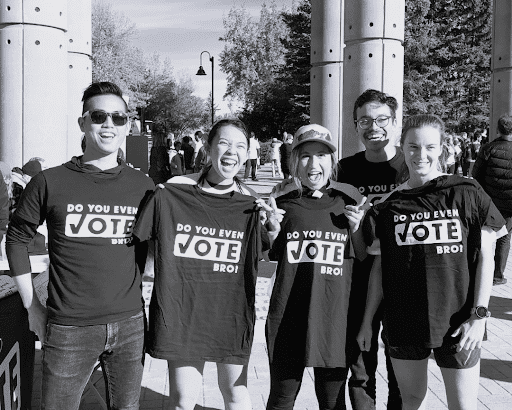
Apathy is Boring started as an online campaign to encourage young Canadians to vote in the upcoming federal election. What began as a one-off initiative quickly grew into a year-round movement dedicated to transforming civic disengagement into active participation. Their work facilitated consistent impact, helping support a 20% increase in the millennial voter turnout in the 2015 federal election. Today, the organisation works to empower youth across all aspects of Canada’s democratic process, not just at the ballot box.
Why it resonated: Apathy is Boring effectively reframed civic engagement as something relatable, creative, and youth-driven, making democracy feel like a space young people could shape. By using accessible language, culturally relevant messaging, and peer-to-peer outreach, it met young people where they were: in schools and universities, at extra-curricular hubs, and online. Its non-partisan stance also built trust across the political spectrum, while its focus on empowerment over lecturing gave youth a sense of agency in the democratic process.
Key Lessons:
- Peer-to-peer organising builds legitimacy: Training and empowering youth leaders to share a message lends authenticity and can extend a campaign’s reach far beyond what a top-down initiative can achieve.
- Speak with, not at: Engagement works best when an audience feels like co-creators to a solution, not targets of a lecture. Framing civic participation as collaborative builds a sense of autonomy and drives a call to action.
- Meet people where they are: Knowing your audience means understanding what spaces they occupy and how to reach those spaces organically. Do research to understand where your audience lives so you can reach them naturally.
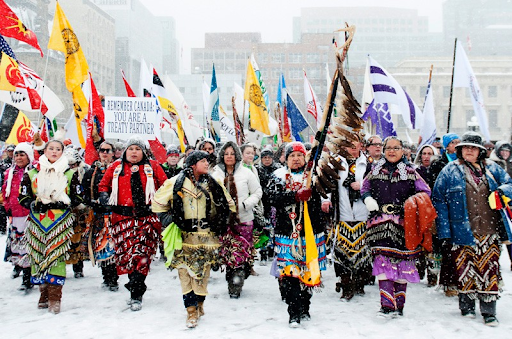
Idle No More is a women-led Indigenous movement that started in 2012 to advocate for Indigenous rights. Rooted in grassroots activism, it rapidly grew into a broad, inclusive network connecting urban and rural Indigenous communities across the Americas. Working alongside non-Indigenous allies, the movement uses peaceful protest as a tool to challenge colonial structures by blending tradition with modern organising in a way few movements have managed so effectively.
Why it resonated: Idle No More places Indigenous voices at the forefront, creating a strategic blend of tradition and modernity by spotlighting lived expertise. Its decentralised structure empowers communities to organise locally on their own terms while uniting under a shared vision.
Key lessons:
- Digital storytelling: Traditional storytelling is a powerful tool for change, and can be adapted to the digital world without sacrificing authenticity. By weaving oral traditions, land-based teachings, and community narratives into videos, livestreams, and online campaigns, Idle No More preserved its authenticity while reaching audiences across the nation.
- Centre lived expertise: Amplifying the voices of those directly affected by a campaign ensures authenticity and inspires deeper engagement from supporters.
- Empower local leadership with shared goals: Idle No More thrived because it gave communities the autonomy to organise actions that reflected their specific realities, while aligning them under a unifying vision of Indigenous rights and decolonisation. This balance between local flexibility and collective purpose made the movement both adaptable and cohesive, allowing it to grow without losing its core identity.
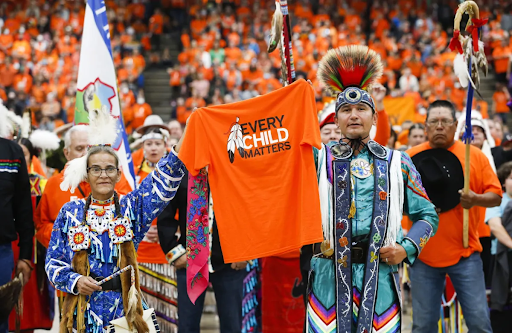
The Orange Shirt Society was founded by residential school survivor Phyllis Webstad as a movement to raise awareness about the lasting impact of Canada’s residential school system: a state-funded network of boarding schools that aimed to forcibly assimilate Indigenous children, causing widespread abuse, profound cultural loss, and lasting intergenerational harm.
On her first day at the St. Joseph’s Indian Residential School, Phyllis wore a brand-new orange shirt her grandmother had gifted her. It was taken from her and never returned.
Decades later, Phyllis founded the Orange Shirt Society, transforming her orange shirt into a symbol of hope and a collective commitment to reconciliation. Every September 30th, on Canada’s National Day for Truth and Reconciliation, Canadians wear orange shirts to honour survivors and foster meaningful conversations about healing and justice.
Why it resonated: Orange Shirt Day’s strength lies in its symbolism. The orange shirt is both accessible and distinct. Wearing it is an easy way to signal public commitment and spark conversations over a recognisable symbol.
Key Lessons:
- Make participation easy and visible: Something as simple as wearing a distinctly coloured shirt gives people a low-barrier entry to engage and affirm solidarity with a movement.
- Consistency builds credibility: Hosting the campaign annually with clearly defined goals and measurable outcomes reinforces reliability, encourages long-term participation, and helps the movement become a recognised, trustworthy presence.
- Storytelling: Centred around the experience of Phyllis, a single survivor’s personal experience can bring history to life and create an emotional connection that inspires action.
Conclusion
Canada’s most impactful campaigns share a common thread: they meet people where they are, invite them into the story, and transform individual participation into collective action. Whether through a t-shirt, a peaceful protest, or a conversation, the world has much to learn from Canada’s ability to grow grassroots actions into movements that leave a lasting mark.