Blog by Elisa Cardillo, Strategic Communications Consultant in Future Advocacy’s EU office
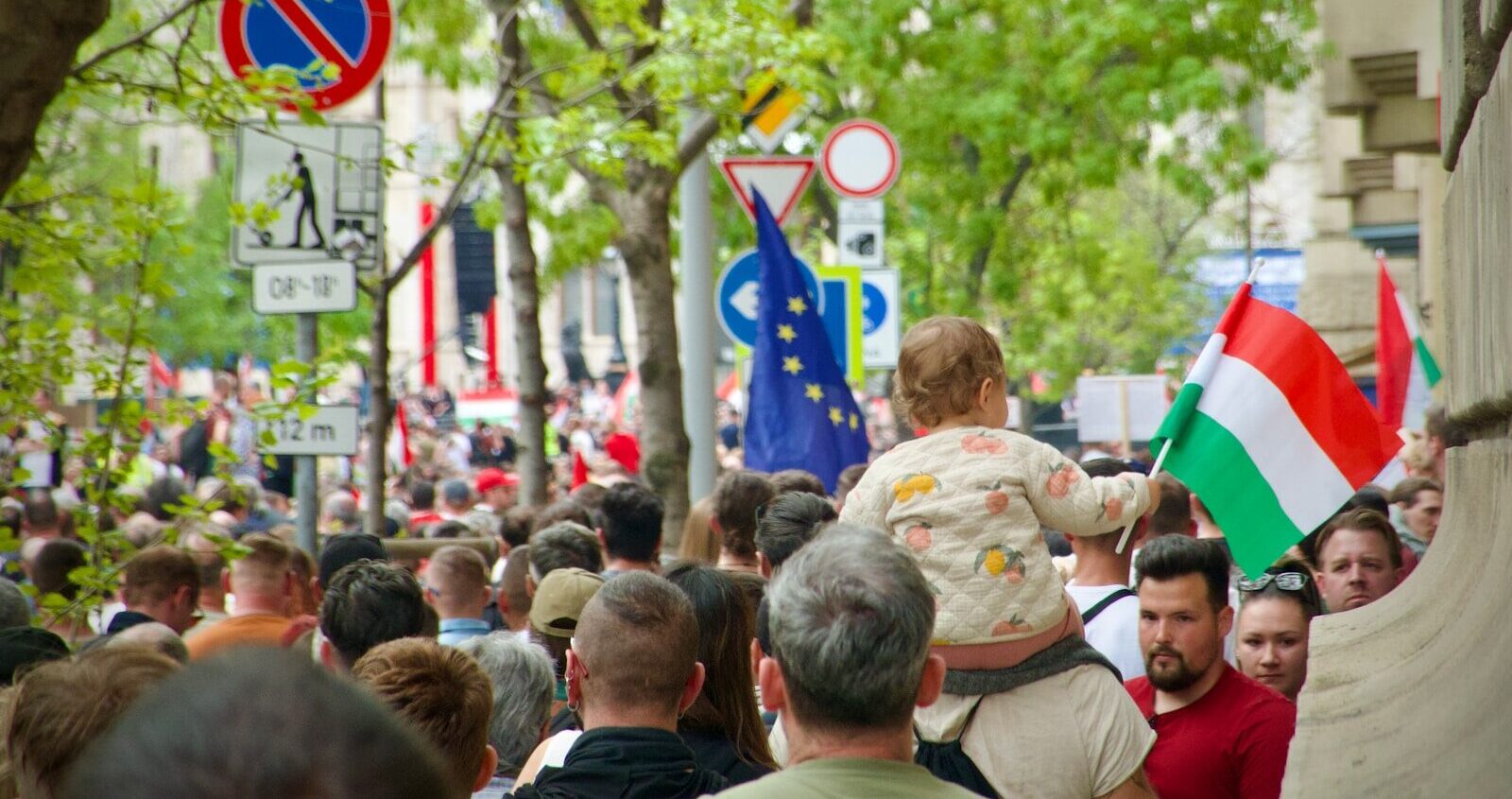
After 16 years in power in Hungary, on 12 April, Viktor Orbán and his party Fidesz lost the election. Tisza, the party led by Peter Magyar, registered a historic win gaining over two thirds of seats in the Parliament. While Fidesz’ defeat was predicted by several pre-electoral polls, the wide margin by which Tisza won – which was the result of the winner-takes-all system introduced by Orbán in 2011 – came as a surprise to most. With a record turnout of nearly 80%, Hungarians, and particularly younger generations, chose change, leaving Orbán with what he described as a “painful but unambiguous” result.
How did we get here?
Although Tisza stood out as the main opposition force, its political DNA is not too different from that of Fidesz. Peter Magyar, the 45-year-old leader of the centre-right winning party, has a long political history within Fidesz, which he only left in 2024 following a judicial scandal involving the party’s leadership. In recent years, Magyar has openly opposed some of Orbán’s political ideas, including the antagonisation of the European Union, but most of his attacks against Fidesz’ leader have focused on corruption, misuse of public funds, and abuse of power. These themes have all played a critical role in leading the public to lose trust in Orbán and gradually abandon him.
While (true or alleged) scandals set the political debate on fire in the run-up to the elections, the two main parties adopted very different strategies in their respective campaigns. On the one hand, Orbán talked extensively about foreign policy – particularly about Hungary’s international standing, its connections with Russia, China and the US, and the country’s access to cheap energy. On the other hand, Magyar won the elections by showing up more and focusing on internal issues which directly impact people’s daily life, including economic development and cost of living, healthcare, education, child protection, and systemic corruption. The approach towards the European Union was one of the main battlefields, with Fidesz criticising the EU’s interference with Hungary’s home affairs and interests, and Tisza stressing the need to rebuild trust with the EU and its member states for Hungary’s own sake.
What will change?
Orbán will continue to lead the country as a caretaker until the new government is formed – presumably in the first half of May at the earliest. However, during a 3-hour-long press conferenceheld right after winning the elections, Magyar presented his priorities and confirmed he would adopt reforms in favour of the country’s rule of law, media freedom, and judicial independence.
This is music to the EU’s ears, and critical for Magyar’s efforts to secure EU recovery fundscurrently frozen due to rule of law concerns in Hungary. To meet the EU criteria, the soon-to-be PM will be able to leverage his two-thirds majority in the Parliament and adopt the necessary reforms without looking for external support.
What does it mean for Hungary in the EU?
When it comes to the EU, another pending issue is the 90 billion EUR loan for Ukraine, which Orbán vetoed in February and continued to oppose in his last EU Summit appearance in March. Magyar is expected to remove the veto, but he will probably maintain the clause for which Hungary is not obliged to directly contribute to the loan. Similarly, Hungary is not set to become an advocate for Ukraine’s EU accession, not even with Tisza as the leading party. Magyar’s line on migration is also likely to remain the same as his predecessor’s, with no surprises in sight with regards to the implementation of the EU Migration Pact.
Compared to Orbán, the new Hungarian PM will probably resort less to his veto power and will try to establish an open dialogue with EU institutions and other member states. However, whether his broader political stances will massively differ from those of the previous government is a question that only time will answer.